


 30 / 50

Press, Journal Article
2
2
PRICE POINT
2
Our base case, therefore, is for a managed,
gradual devaluation of the renminbi this year
and for authorities to re-build confidence in
the currency. But it’s certainly possible to
envisage more disruptive outcomes.
THE ECONOMY
It was inevitable that China’s economy—
the
world’s
second largest
—
would slow from the
double
–
digit growth attained over previous
decades, particularly with the government
attempting to transition the economy from one
led by manufacturing, investment, and exports
to one more driven by domestic consumption
and services.
Nevertheless, the slower pace of growth
along with mounting concerns whether
China’s leaders can effe
ctively manage this
transition have sent tremors through global
emerging markets several times over the
past three years
—
with fears now impacting
developed markets as well.
The government’s recent heavy
-handed intervention aimed at supporting its equity markets and currency, and its
inconsistent communications, have undermined
investors’ confidence in China’s leadership and spurred more
capital outflows from the country.
The Chinese government recently reaffirmed its expectation for economic growth to average 6.5% per year
between now and 2020. We consider that to be difficult to achieve without also seeing some undesirable
consequences.
While the risk of policy mistakes remains high and should be closely monitored, we don’t believe that a hard
landing for China is the most likely outcome. Policy
makers have every incentive to ensure that doesn’t happen;
their very existence probably depends on it.
Several options, including the use of monetary and fiscal policy, are likely to be used to support growth and
smooth the transition. Even if China grows at 6.3% this year as the International Monetary Fund forecasts, that is
still a very impressive rate in the context of global growth.
THE DEBT BUBBLE AND FINANCIAL CRISIS
China has experienced a massive buildup of debt since the 2008 financial crisis and a significant rise in
nonperforming assets in its banking system.
We believe that the level of nonperforming loans in China is substantially higher than the 1.5% rate reported by
the central bank. China’s banking stocks have been trading at valuations that would indicate a nonperforming loan
rate of about 6%. If China were to suddenly recognize all of those nonperforming assets, it could prove highly
disruptive to the economy and could trigger a financial crisis at some point. But we think that outcome is
extremely unlikely given China’s government control of the banking system and the financial s
ystem more
broadly.
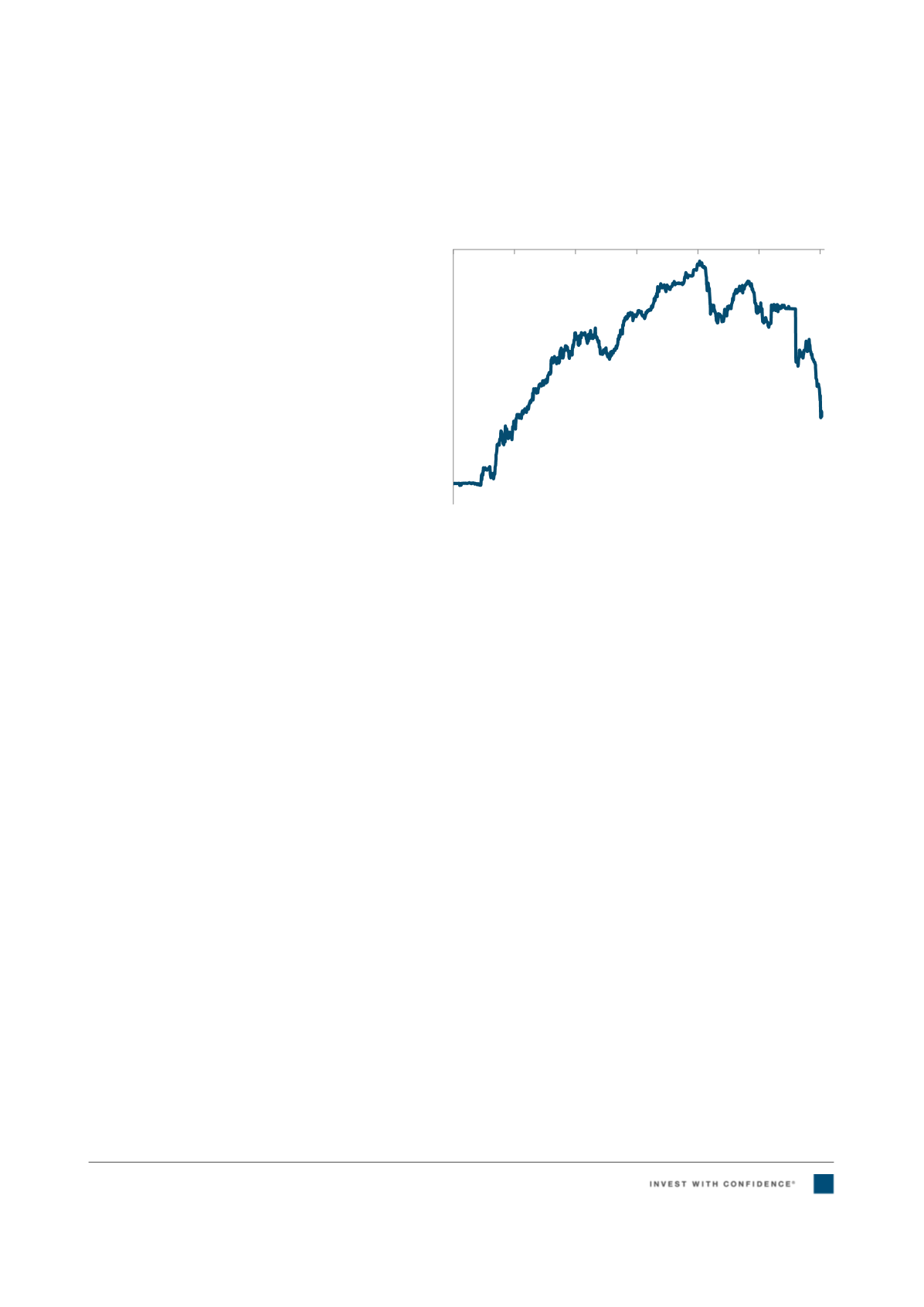
Figure 1:
Chinese Yuan in One U.S. Dollar
Inverted scale to show decline in yuan
Source: Bloomberg. As of January 2016
6.0
6.1
6.2
6.3
6.4
6.5
6.6
6.7
6.8
6.9
2010 2011 2012 2013 2014 2015 2016
A Declining Currency
30